Working with an event management agency: Your questions answered


Organisations considering outside event support typically arrive with the same set of questions: whether it will genuinely save time and whether the investment delivers a meaningful return. This article answers all those questions and sets out what that partnership looks like in practice and the evidence behind it.
How does working with an event management agency save my team time?
Every hour your team spends chasing venue contracts, negotiating with suppliers and rebuilding spreadsheets is an hour not spent on the work that actually drives your organisation forward.
Events look deceptively manageable from the outside. But anyone who has planned one knows the reality: weeks of back-and-forth with venues, hours negotiating with AV suppliers, late nights building registration systems and the constant low-level anxiety of holding a hundred threads at once. For most in-house marketing or operations teams, this is time borrowed from core responsibilities and it comes with a cost.
A specialist agency arrives already knowing the right questions to ask, the right suppliers to call and the right moments to intervene before small problems become big ones. What might take an in-house team a week, an experienced agency can handle in a day because they have done it hundreds of times before.
When you work with an agency, your team has a single point of contact not a full event operation to run. The hundreds of emails, calls and decisions that sit behind a successful event happen on the agency's side, not yours. Your team gets to show up to the event, not run it.
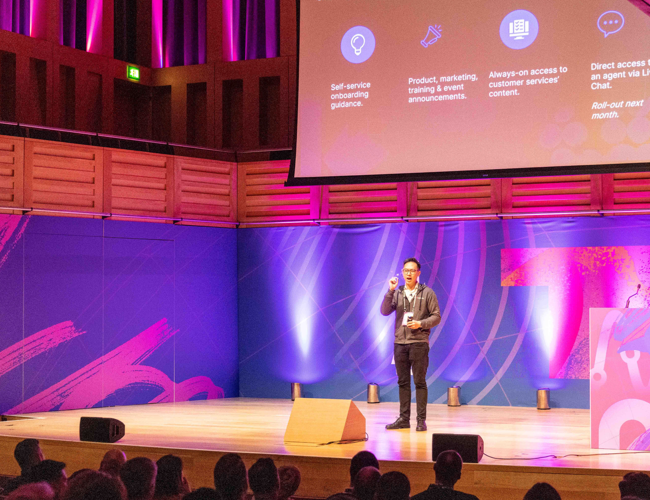
In practice: When VIAVI Solutions needed to manage four major European technology exhibitions a year - including Mobile World Congress, where over 90 team members needed support - they turned to Outsourced Events to take full operational ownership. Their internal teams could focus entirely on customer conversations and business development. That partnership has now run for over eight years. Read more.
If an agency reports back to me, how does that save time? Why not just do it myself?
It is a fair question. If an agency is sending you updates, joining your calls and asking for sign-off, how is that actually saving time? The answer lies in what good reporting really does and what it replaces.
When a good event management agency reports back to you, it is not creating work. It is giving you the information you need, in the format you need it, at the moment it is useful. A well-structured progress update means you can make an informed decision in five minutes rather than spending an hour working out what is happening.
You stay in control without being in the detail. The agency handles day-to-day operations; it surfaces decisions that genuinely need your input and it keeps everything else moving without pulling you in unnecessarily.
One of the clearest signs of an experienced event management team is knowing which problems to solve quietly and which ones need your awareness. The best agencies do not escalate everything they handle the vast majority of issues as a matter of course and only bring things to you when a decision genuinely lies with you. This judgement is what you are really paying for.
How does outsourcing my events benefit my whole team?
The case for working with an event management agency is often made in terms of cost and logistics. But some of the most significant benefits are felt not in spreadsheets, but in the day-to-day experience of your team.
Event management has a way of expanding to fill whatever time is available and then some. When events are managed in-house, the people responsible often find themselves working longer hours in the weeks before an event, fielding queries at evenings and weekends and carrying a level of stress that is not really in their job description. When a specialist agency takes on that responsibility, your team is freed from this cycle.
Events stop being a source of dread. With a specialist agency as your partner, your team knows experienced professionals are handling the complexity. Events become something to look forward to, not something to survive.
Working with a specialist agency also gives you immediate access to a team that has already built the relationships and expertise your team would take years to develop and that continually maintains and deepens it across many events each year. Perhaps most importantly, for the first time, your team can actually enjoy your own event - present in the room as hosts, not operators.
In practice: When Kimberly-Clark needed to bring together 90 global leaders for their first-ever Leadership Summit, Outsourced Events managed not just the logistics but the full creative and communications programme. The outcome: a 9.5/10 average attendee satisfaction rating and 100% leadership participation in all sessions. Find out more.
How can an event management agency add real value to our planning process?
Value in event management goes beyond getting the logistics right. The best agencies bring something that changes what is possible in the quality of your events, the impact they have and the return they deliver.
A good event management agency does not just execute plans it helps shape them. When you bring in a specialist, you are bringing in a team that will ask the right questions about your objectives, challenge assumptions where it is useful and help you define what success looks like before a single venue is approached. That knowledge is available to you from the first conversation.
Specialist agencies work with venues, AV suppliers, caterers and contractors on a regular, ongoing basis giving them genuine negotiating leverage and trusted relationships that get problems solved quickly. Clients benefit from this directly: better rates, more responsive suppliers and the confidence that the people delivering their event have been tried and tested before.
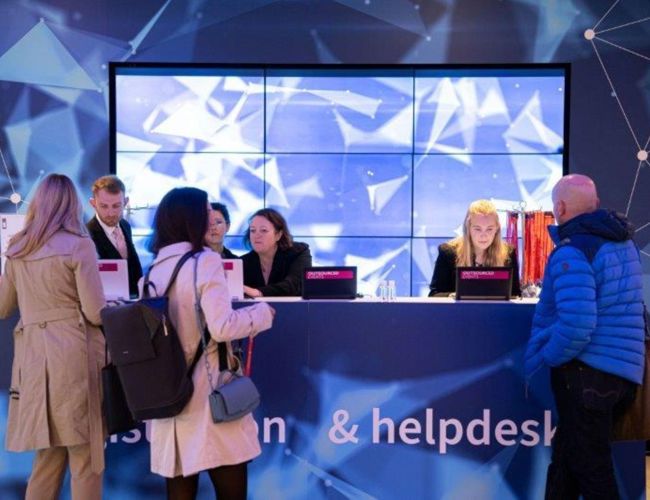
The right technology also makes a real difference. First impressions matter. The registration and check-in experience is often a delegate's first physical interaction with your event and it sets the tone for everything that follows. Post-event, a good agency provides clear reporting that gives you the information to make the next event more effective than the last.
In practice: The BSGE Annual Scientific Meeting grew from 657 attendees in 2023 to over 1,000+ delegates in 2026, 52 sponsors and exhibitors, 98.3% would recommend the conference to a colleague, 106% growth in total conference income in four years.
How do event management agencies work and how do the best ones integrate with your team?
One of the most common questions organisations ask before engaging an event management agency is simply: how does this actually work in practice? The difference between a great agency relationship and a frustrating one usually comes down to integration and how well the agency fits into the way your organisation operates.
A good event management agency does not impose a generic process on you. It takes time to understand how your organisation communicates, how decisions are made, who the key stakeholders are and what your culture looks like and then adapts accordingly. The best agency relationships reach a point where the distinction between internal and external becomes almost irrelevant.
You should have a named, dedicated event manager who owns your project and is your primary point of contact throughout. A good agency also works to your preferred communication style and cadence some clients want weekly structured updates; others prefer a lighter touch. And as your events programme evolves, the scope of support should be able to evolve with it.
The best agency relationships are built on financial transparency. Clear budget tracking, regular reporting against it and no hidden fees or surprise invoices. This transparency is not just good practice it is the foundation of a relationship built to last.
Take a look at another one of our informative articles to find out more - What to look for when choosing an event management agency.
If I work with an agency, how will they ensure my event is commercially sustainable?
For associations and not-for-profit organisations, events are often one of the primary mechanisms through which you generate income, engage members and demonstrate the value of membership. Getting the commercial model right is foundational.
The right agency for an association is one that understands the specific dynamics at play: the relationship between delegate fees, sponsorship income and member expectations; the governance considerations and the reality that your event surplus often funds the wider work of the organisation. Look for agencies with a demonstrable track record in association events and professional affiliations such as ABPCO membership. ABPCO (The Association of British Professional Conference Organisers) is the leading UK membership body for professional conference organisers, representing and supporting those who plan and deliver conferences and events across the association and not-for-profit sectors.
Commercial sustainability starts with a realistic budget - modelling different delegate number outcomes, different sponsorship levels and different venue options so you can make informed decisions. Delegate income is the most controllable revenue lever for most association events and deserves careful thought: the right registration model, fee structures, early bird pricing and targeted marketing can make a material difference to income.
Sponsorship and exhibition income can also be transformative but only if structured and sold effectively. A good agency helps you develop a sponsorship proposition that is genuinely attractive to industry partners and manages the exhibition floor in a way that makes partners want to return year after year. After the event, clear financial reporting gives your board the transparency it needs and your team the confidence to plan the next event.
In practice: The BSGE Annual Scientific Meeting had a clear commercial objective: ensure profitability while growing attendance. Outsourced Events built and managed the full commercial framework - from delegate registration and abstract management to sponsor and exhibitor liaison. The 2026 the event reached the highest level of attendance ever with over 1,000 delegates and 106% growth in total conference income in four years.
Ready to find out more?
If you are looking for an event management partner who will work as an extension of your team, we would love to talk. Get in touch at [email protected].
Why not also explore our case studies to see how we've delivered extraordinary events for clients across the technology and association sectors or take a look at our knowledge hub for practical guides and industry insights, including what to look for when choosing an event management agency and our research paper, The Confidence Code.
Our Latest Knowledge & Insights

Outsourced Events wins Best Large Agency of the Year at the UK Agency Awards 2026
Outsourced Events has won Best Large Agency of the Year at the UK Agency Awards 2026. The UK Agency Awards celebrate the best agencies across the country and the work they deliver for their clients. Best Large Agency of the Year looks beyond a single event or campaign to the business behind it. The win continues a big year of recognition for the team, as Outsourced Events marks 25 years since it was founded.
Read More
The company I hoped we'd become: 25 years of OE
To mark 25 years of Outsourced Events, CEO and Co-Founder Denise Sharpe looks back on the journey of the London-based event management agency she founded with Alexandra Sibley in 2001. From a desk in her son's bedroom to delivering more than 240 conferences, tradeshows and corporate events a year for technology brands and associations worldwide, she shares how long-term client partnerships, a people-first company culture and five core values shaped an award-winning agency. She also explains how the team celebrated its 25th anniversary the way it plans every event: with intention.
Read More
Why exhibitors have 3.5 seconds to earn a second look
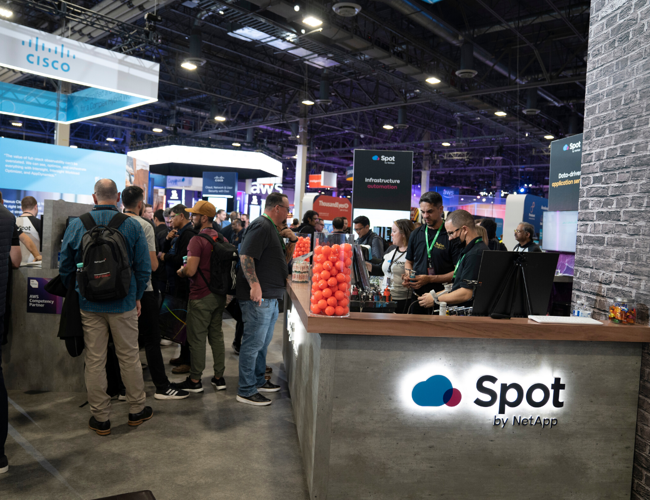
Most brands treat signage as a finishing touch, something to sort out once the stand design, the demos and the giveaways are locked in. The evidence suggests that's the wrong way round. Signage is doing most of the work in the first 3.5 seconds. It's the first thing read from a distance, before a single conversation happens, which makes it one of the highest-leverage decisions in the entire stand design, not an afterthought. Find out more.
Read More