Why your conference agenda may be working against your attendees' brains


You've spent months crafting the perfect agenda. But if the programme doesn't account for how the brain actually processes and retains information, even the most compelling content can fall flat. Here's what neuroscience tells us and what it means for how you design events.
SOURCE & CONTEXT
This article draws on insights shared by Professor Paul Howard-Jones at a recent Outsourced Events thought-leadership evening. A full write-up of his talk is available to download: Mind the neuromyth: What neuroscience really says about how we learn.
The brain isn't a passive receiver
One of the most persistent assumptions in event design is that a strong speaker in a well-lit room is enough to drive learning and engagement. Neuroscience suggests otherwise. Professor Paul Howard-Jones, professor of neuroscience and education at the University of Bristol, explored these ideas in depth at the Outsourced Events Mind the Neuromyth thought-leadership evening and his findings challenge some widely held assumptions about how conferences should be structured.
Howard-Jones opened with a deceptively simple point: learning is a biological process, not a passive one. The human brain evolved to convert sensory information into action. Which means that sitting still, listening to back-to-back presentations, is fundamentally at odds with how we're wired. For event professionals, that's a significant design challenge and an opportunity.
“Emotions are not just a by-product of learning – they are central to it." - Professor Paul Howard-Jones
The problem with passive agendas
Most conference programmes are built around information transfer: keynotes, panels, breakout sessions. But the research points to a crucial gap between information delivered and information retained.
Howard-Jones highlighted a phenomenon known as the enactment effect, the finding that doing something significantly improves both understanding and memory of it. When we physically interact with content, whether through workshop exercises, live demonstrations or hands-on problem-solving, we engage far more neural pathways than when we simply listen.
The implications for agenda design are clear: events that mix formats, introducing movement, interaction and hands-on activity alongside traditional presentations, produce better outcomes for attendees.
What this looks like in practice
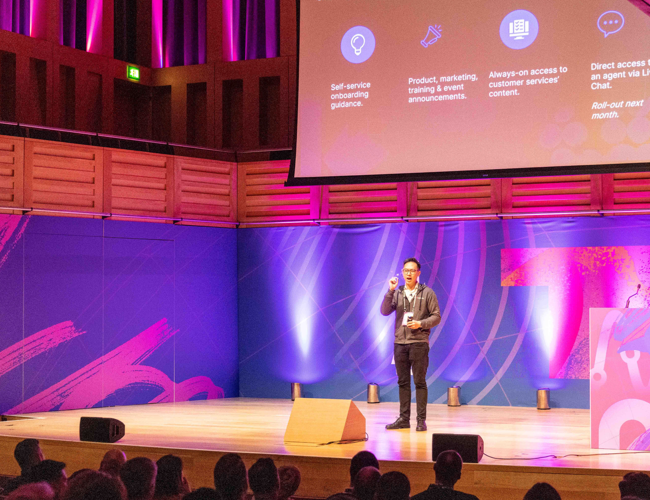
At Outsourced Events, we work with technology brands to build programmes that balance keynote content with smaller-format interactive sessions. For Boomi's World Tour in London, the agenda was designed to give delegates both inspiration and application, mixing thought-leadership content with peer-to-peer exchange and hands-on product exploration. The result was an event that attendees left with not just new ideas, but with a clear sense of what to do next.
Fear kills focus - and that includes poorly designed events
Howard-Jones was direct on this point: fear and anxiety impair our ability to focus by overloading working memory. While this is most commonly discussed in educational settings, the principle applies just as readily to business events.
When attendees feel unclear about what's happening next, uncomfortable in an unfamiliar environment, or anxious about a networking element they weren't prepared for, cognitive load increases and retention drops. Event professionals have more control over this than they might think.
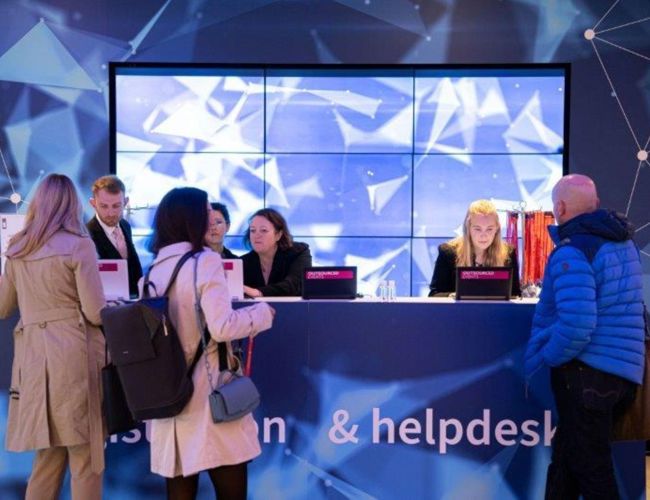
Thoughtful onboarding, clear wayfinding, warm hosting and programming that gives attendees agency in what they attend - these aren't just nice-to-haves. They're neurologically sound design choices that directly affect how well content lands.
Movement isn't a distraction - it's a tool
It's tempting to treat coffee breaks as schedule filler. But Howard-Jones pointed to strong evidence that aerobic exercise genuinely benefits cognitive performance and learning retention - even when it replaces traditional learning time.
A short walk between sessions, a standing breakout, or a kinaesthetic workshop activity isn't time lost from the agenda. It's an investment in how well the surrounding content is absorbed.
This is increasingly reflected in how leading event programmes are designed. Rather than treating movement as a concession to audience restlessness, forward-thinking agencies are building it in deliberately - as a mechanism for improving the cognitive experience.
What this looks like in practice
For the SentinelOne EMEA PartnerOne Conference in Budapest, Outsourced Events developed an event experience that wove together high-energy content, immersive moments and deliberate changes of pace throughout the day. Delegates moved between formats and environments, keeping attention fresh and emotional engagement high. The result was a conference that attendees described as genuinely memorable - not just informative.
Multi-sensory design: the end of one-size-fits-all
One of the most widely held beliefs in corporate learning and development is that people learn better when taught in their preferred style - visual, auditory, reading/writing or kinaesthetic, the so-called VARK model. Howard-Jones was clear: the research does not support this.
The brain is highly interconnected. Seeing an image activates not just the visual cortex but also the auditory cortex, through association. Learning is inherently multi-sensory, and events that combine visual materials, discussion, written content and hands-on activity engage more neural pathways and produce better outcomes for everyone in the room.
This means the question isn't 'how do I cater to different learning styles?' It's 'how do I build a richer, more connected experience that gives the brain more to work with?'
Designing for the brain: five questions to ask about your next event
• Does the agenda include physical or interactive elements, not just passive listening?
• Are movement breaks built in deliberately, rather than treated as schedule filler?
• Does the environment and hosting style minimise anxiety and cognitive load for first-time attendees?
• Does content use multiple modalities - video, discussion, demonstration and written materials - rather than relying on a single format?
• Are there moments of genuine novelty or surprise that activate the brain's reward system and sustain attention?
Related content
This article is part of a series exploring the neuroscience of events and communication, informed by the Outsourced Events thought-leadership evening with Professor Paul Howard-Jones.
Download the full white paper: Mind the neuromyth: What neuroscience really says about how we learn
Read the companion article: The dopamine-driven event: what neuroscience tells us about tradeshow engagement
About Outsourced Events
Outsourced Events is an award-winning B2B event management agency with over 25 years of experience, specialising in technology brands and professional associations. We partner with global clients to design and deliver events that engage audiences, extend reach and amplify impact. To discuss your next event, get in touch at [email protected].
Our Latest Knowledge & Insights

Outsourced Events wins Best Large Agency of the Year at the UK Agency Awards 2026
Outsourced Events has won Best Large Agency of the Year at the UK Agency Awards 2026. The UK Agency Awards celebrate the best agencies across the country and the work they deliver for their clients. Best Large Agency of the Year looks beyond a single event or campaign to the business behind it. The win continues a big year of recognition for the team, as Outsourced Events marks 25 years since it was founded.
Read More
The company I hoped we'd become: 25 years of OE
To mark 25 years of Outsourced Events, CEO and Co-Founder Denise Sharpe looks back on the journey of the London-based event management agency she founded with Alexandra Sibley in 2001. From a desk in her son's bedroom to delivering more than 240 conferences, tradeshows and corporate events a year for technology brands and associations worldwide, she shares how long-term client partnerships, a people-first company culture and five core values shaped an award-winning agency. She also explains how the team celebrated its 25th anniversary the way it plans every event: with intention.
Read More
Why exhibitors have 3.5 seconds to earn a second look
Most brands treat signage as a finishing touch, something to sort out once the stand design, the demos and the giveaways are locked in. The evidence suggests that's the wrong way round. Signage is doing most of the work in the first 3.5 seconds. It's the first thing read from a distance, before a single conversation happens, which makes it one of the highest-leverage decisions in the entire stand design, not an afterthought. Find out more.
Read More