Sustainable events: Top tips to reduce the environmental impact of your next event


Introduction
As the world becomes increasingly aware of the importance of protecting the environment, the events industry is under pressure to adopt more sustainable practices. The sector has a unique opportunity to lead by example, by reducing the environmental footprint while still delivering memorable experiences.
Here are our top tips on how to reduce the environmental impact of your next event:
1. Location, location, location
Travel to the event – delegates, crew, suppliers and couriers – is almost always the highest contributor towards its carbon footprint*. Therefore, the single most important thing you can do to reduce carbon emissions of your event is to choose a location which:
- minimises distance travelled by the majority of attendees
- maximises use of climate-friendly travel options (e.g. Eurostar, train, coach, bus or cycling) and minimises flying (especially domestic and short haul)
You can also consider:
- Carpooling and shuttle Services: Organise carpooling options or shuttle services to and from major train stations.
- Bicycle facilities: Provide bike racks and promote cycling as a mode of transport.
2. Choosing eco-friendly venues
Selecting venues that prioritise sustainability is next on our list. Not only does this help reduce the carbon emissions of your own event, but it helps to support venues which are doing their best for the environment.
- Energy efficiency: Facilities that use renewable energy sources and have energy-efficient systems in place.
- Waste management programs: Venues that offer comprehensive recycling and composting programs.
3. Reduce waste
The key thing about reducing waste is to plan for good waste management right from the start. Work with the venue and identify your waste streams before purchasing anything for the event.
Always apply the ‘Zero Waste Hierarchy’ where the use of materials is first reduced as much as possible, and then any materials which are needed are re-used, repaired and finally recycled, in that order.
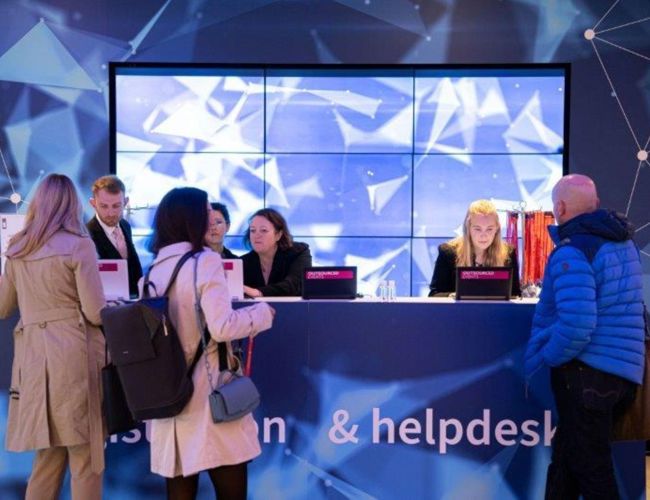
- Digital displays and branding: Use digital screens and creative lighting instead of foamex, vinyl, or other printed materials.
- Reusable serveware: Single-use plastic cutlery is now mostly banned in England, and wooden or bamboo serveware has an unexpectedly high carbon footprint. The best option is to always use re-usable; washing up crockery and cutlery is better than single-use.
4. Sustainable catering
Food and beverage choices can significantly impact the sustainability of an event:
- Plant-Based Options: The biggest difference you can make is by offering plant-based menus, which have a significantly lower environmental impact than meat-based dishes. The carbon footprint of a roast beef dinner is higher than driving 100 miles.
- Fairtrade ingredients: Find out where your coffee, chocolate, tea and sugar are sourced. Buying these common items (and others) from Fairtrade suppliers directly supports better prices, decent working conditions and a fairer deal for farmers and workers in developing countries.
- Donate Unused Food: Partner with local charities or food banks to donate any unused food, reducing waste and supporting the community.
- Water on tap: The carbon emissions associated with bottled water is 1000 to 2000 times higher than tap water. Ask your venue to provide drinking water on tap, and get delegates to bring their own bottle.
- Local suppliers: Only a very small percentage of food’s carbon emissions are associated with transport**, and so the first consideration should be food type not distance travelled. However, sourcing local food has other benefits, such as supporting local suppliers and good animal welfare.
5. Educate and engage attendees
Engaging attendees in sustainability efforts can amplify the impact:
- Sustainability Information: Provide information on the event’s sustainability initiatives and how attendees can contribute.
- Interactive Activities: Include activities that educate attendees about sustainability, such as workshops or interactive displays.
- Feedback and Improvement: Collect feedback and ideas on sustainability, and use it to improve future events.
Conclusion
By adopting these sustainable practices, you can significantly reduce the environmental impact while still ensuring high-quality experiences. However, these suggestions are just a step in the right direction. Sustainability is not just a trend but will become necessary for everyone to ensure the events industry is more ecologically responsible.
If in doubt, knowledge is power; take a look at the information from ‘World In Data’ or refer to isla to make sure you’re informed by the latest research and data. These resources make sustainable knowledge accessible, understandable, and help to empower those working to build a better future for our planet.
Implementing these strategies and educating ourselves on sustainable options for events requires commitment and creativity - but the benefits for the environment and the community are well worth the effort.
*See isla’s 2023 ‘Temperature Check’ report, which analyses data from 127 UK-based events, equivalent to 1,163 live event days.
** World in Data: https://ourworldindata.org/food-choice-vs-eating-local
Our Latest Knowledge & Insights

Outsourced Events wins Best Large Agency of the Year at the UK Agency Awards 2026
Outsourced Events has won Best Large Agency of the Year at the UK Agency Awards 2026. The UK Agency Awards celebrate the best agencies across the country and the work they deliver for their clients. Best Large Agency of the Year looks beyond a single event or campaign to the business behind it. The win continues a big year of recognition for the team, as Outsourced Events marks 25 years since it was founded.
Read More
Why exhibitors have 3.5 seconds to earn a second look
Most brands treat signage as a finishing touch, something to sort out once the stand design, the demos and the giveaways are locked in. The evidence suggests that's the wrong way round. Signage is doing most of the work in the first 3.5 seconds. It's the first thing read from a distance, before a single conversation happens, which makes it one of the highest-leverage decisions in the entire stand design, not an afterthought. Find out more.
Read More
Outsourced Events celebrates double shortlisting at the ABPCO Awards
Outsourced Events (OE) has been shortlisted for not one but two events at the ABPCO Awards 2026! Both the BSGE Annual Scientific Meeting 2026 and BMFMS Annual Conference 2026 are in the running for the Best Event by an Agency PCO category.
Read More